Translated from Albanian · Original article in Albanian →
By Besmir Semanaj
In a state governed by the rule of law, guilt is determined by the court. The prosecution accuses, the defence objects, the judge decides. No one has the right to bypass this path, least of all the head of the executive. On Friday, 23 October 2026, Edi Rama bypassed it.
What happened
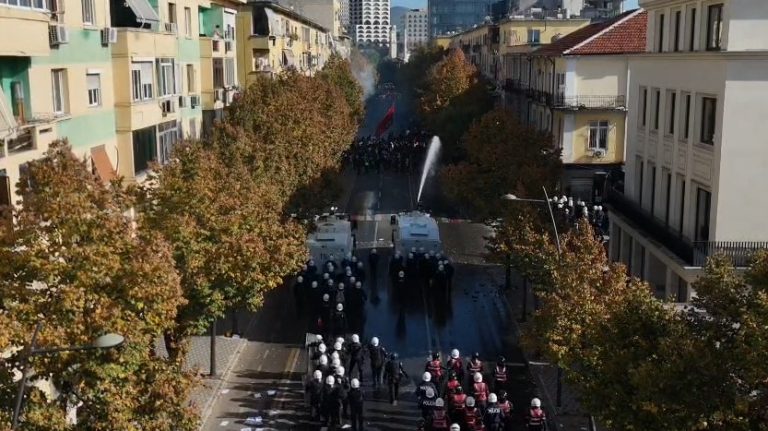
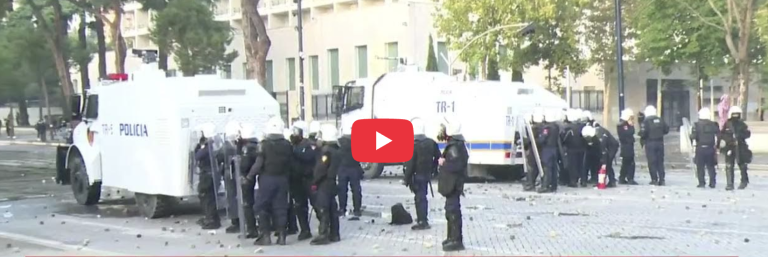
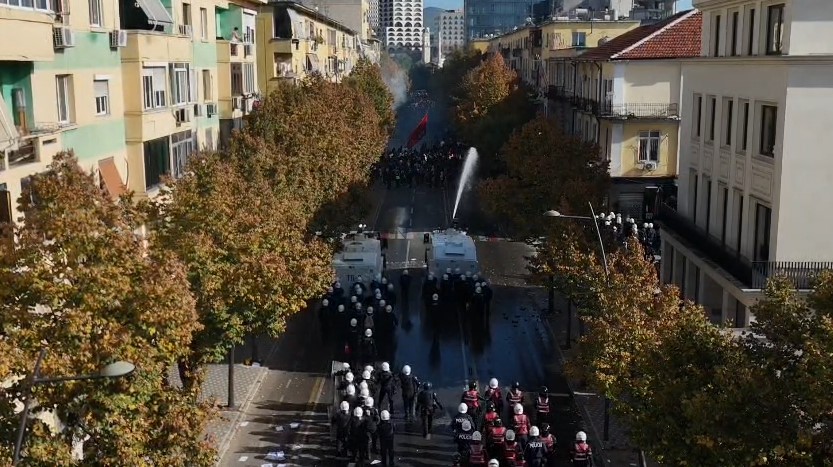
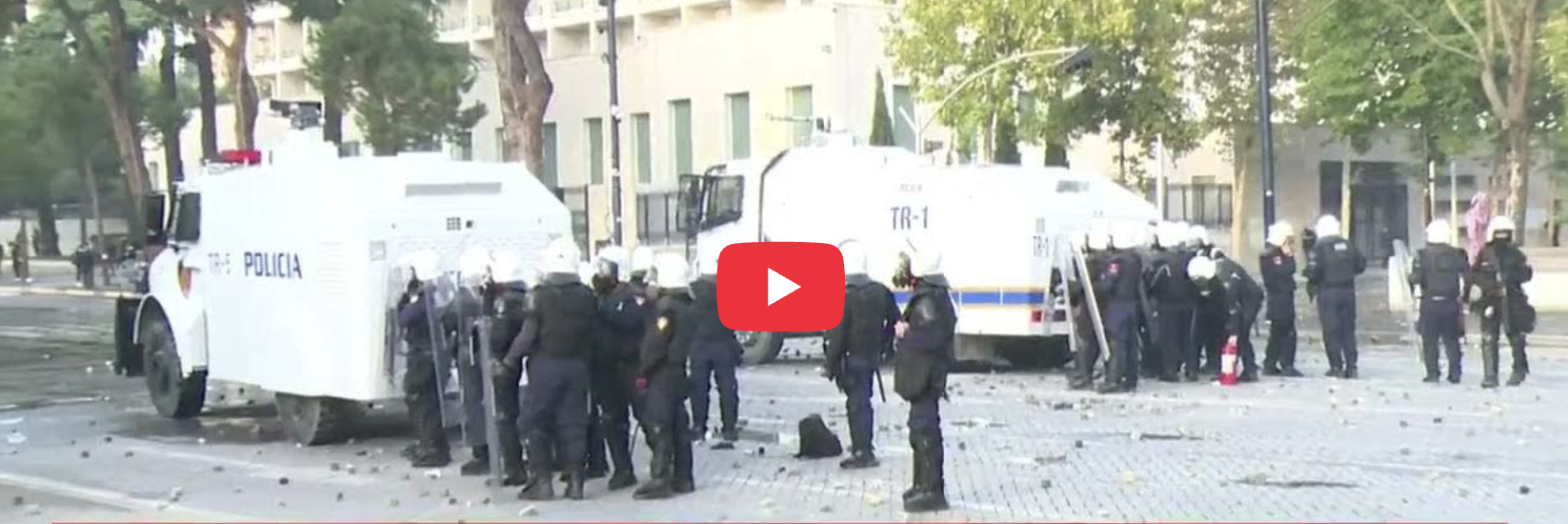
In a statement to the media, Rama published a list of people arrested during the protest who, according to him, are not students and have no connection to that category. He presented them with initials and photographs with their eyes covered, reading out the charges and criminal records that, according to him, weigh on them. He then went further and declared that these people had been paid by organised crime and foreign forces to overthrow Albania.
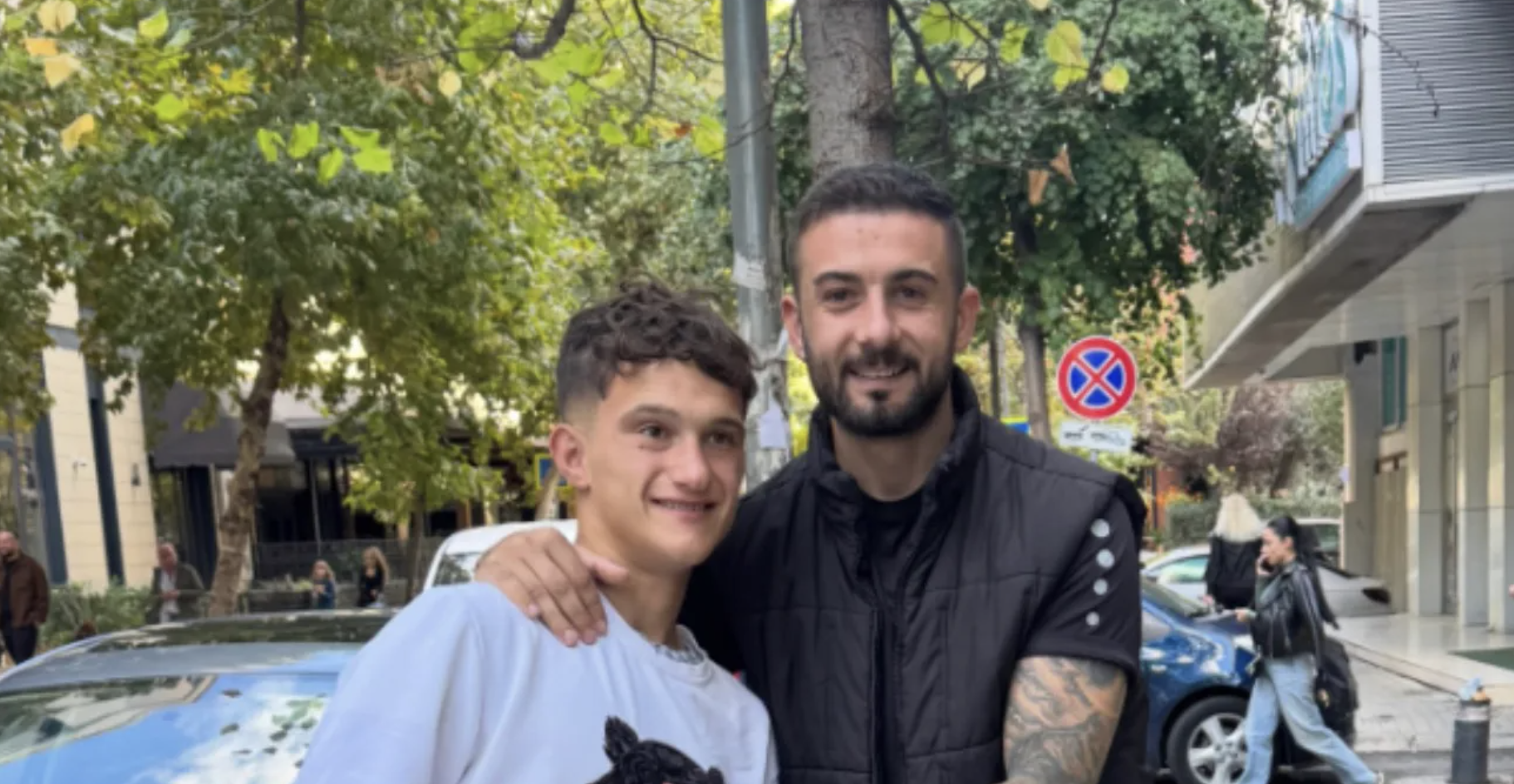
The list also included a minor. Of a 17-year-old, Rama said he was neither a pupil nor a student, and that he had a record for wilful damage.
An accusation that collapsed within hours
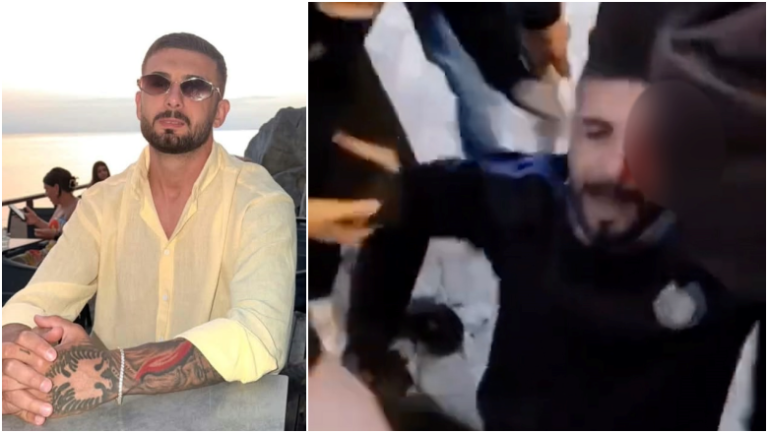
Of J.S., aged 20, Rama declared that he is not a student and cited the production and sale of narcotics as his criminal record.
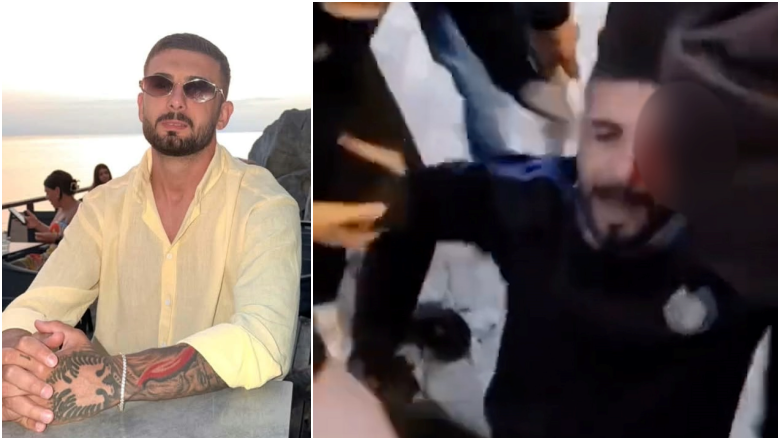
Within the day, the young man appeared before the cameras himself. Jon Sinoimeri recognised himself in the photos and the file published by Rama and went to the Prime Minister’s Office to say that he is a Medicine student with a grade average of 10. He called the statement a lie and stressed that he has never been convicted and has never appeared before a court. According to his account, after many hours at the police station he was released without being brought before a court.
The Prime Minister presented no evidence. According to BIRN, Rama has not provided evidence for his claims against the Medicine student. The same applies to the most serious accusation, that of funding by crime and foreigners, because the accusations made in the statement do not in themselves constitute proof that those arrested were financed by criminal organisations or foreign entities. As for the claim about “Antifa”, there is no public evidence that this movement coordinated the protests. The Prime Minister simply declared that the police have the data.
If a single name on the list turns out to be false, the entire document loses credibility. If the Prime Minister can declare a student with a grade average of 10 a “drug trafficker”, then any one of us could be the next name.
The double standard
This is not only a legal problem. It is also a moral one.
When senior government officials are named as defendants by SPAK, the Prime Minister loudly demands respect for the presumption of innocence. When citizens take to the streets in protest, he forgets the same principle and presents them as criminals before the cameras, without trial and without a verdict. The presumption of innocence is not a privilege of ministers. It is the constitutional right of every Albanian.
This is not a coincidence, it is a method. Only a few days earlier, Reporters Without Borders stated that on 18 October Rama groundlessly accused the owner of News24 of fabricating reports about the student revolt with the aim of toppling the government. First the journalists, now the students.
Which laws may have been violated
1. The Constitution, Article 30: the presumption of innocence.
No one is considered guilty until guilt is proven by a final court decision. When the head of government publicly presents those arrested as paid criminals, without any court decision, he usurps the role of the court.
2. The European Convention on Human Rights, Articles 6(2) and 8.
The Strasbourg Court, since the case of Allenet de Ribemont v. France (1995), has held that when a public authority declares someone guilty before trial, the presumption of innocence is violated, even if the person has merely been arrested. Publishing photos and criminal data also infringes the right to private life.
3. The Criminal Code, Article 120: defamation.
This article punishes the deliberate dissemination of statements known to be false that harm a person’s honour and dignity. The penalty is a fine, with a higher upper limit when the offence is committed publicly and to the detriment of several people. The Sinoimeri case is precisely this scenario, if it is proven that the accusation was false and that the Prime Minister knew or should have known it.
4. The Criminal Code, Article 248: abuse of office.
This article punishes an official who acts contrary to the law when this harms the lawful interests of citizens, with imprisonment of up to 7 years. The question the prosecution must investigate is simple: from which system did the Prime Minister obtain the data on criminal records, and on what legal basis did he make them public?
5. The Law on the Protection of Personal Data.
Data on criminal convictions and proceedings are a specially protected category. Their publication by a political official, without a legal basis, may lead to sanctions by the Commissioner for the Right to Information and Protection of Personal Data. Initials and covered eyes are not enough when a person is easily identified by age, face and circumstances. Sinoimeri himself is proof of this, because he recognised himself immediately.
6. The Code of Criminal Justice for Minors.
The identity and data of a minor in criminal proceedings are protected by law. Including a 17-year-old in a “blacklist” read out by the Prime Minister at a press conference is a direct violation of this code.
7. The Civil Code: non-pecuniary damage.
Beyond the criminal process, every person wrongly included on the list has the right to ask the court for compensation for the damage to their honour and reputation.
What must happen
I am not declaring the Prime Minister guilty. That would be exactly what I am denouncing. But the institutions have clear obligations:
- The prosecution must verify how criminal data left the police and justice systems and ended up at a political press conference.
- The Data Protection Commissioner must open an administrative investigation into the publication of the criminal data and photographs.
- The Ombudsman must respond to the violation of the presumption of innocence and the inclusion of the minor.
- Jon Sinoimeri and every other person wrongly included have the right to file a criminal complaint for defamation and a civil lawsuit for moral damages.
- The Prime Minister should, at the very least, publicly apologise to the student and withdraw the list until every name is verified by a court.
A government that needs to defame its best students to justify violence against them has lost the argument. Albania does not need a prime minister who passes judgement from the podium. It needs courts that judge and citizens who do not stay silent.